Guide 1
What usually works at four
Children develop at different speeds. Many four-year-olds like pretend play, playing with other children, helping with simple tasks, talking about what happened, drawing, catching a large ball, and answering questions about familiar things.
Look for preschool-sized materials, hands-on play, enough room to move, a task with a result they can see, short waits, bathrooms nearby, and an exit that does not require crossing the whole venue again. A place works when the child can tell what to do and start without much help.
Quick checks
- Preschool-sized equipment or materials
- Hands-on activity with little waiting
- Bathrooms and a short route back to the exit
Guide 2
A playground with a preschool area
Look for equipment marked for ages 2–5, low climbing routes, usable swings, and a surface you can cross easily. A separate preschool area reduces conflicts with faster, larger children.
Give the visit a small job: cross three bridges, find two different slides, or play follow-the-leader around the edge. For one adult with more than one child, check sight lines and exits before play begins.
Quick checks
- Equipment marked for ages 2–5
- Low climbing and a manageable surface
- Clear sight lines and exits
Guide 3
A museum or library with one clear purpose
At a children’s museum, a pretend grocery store, building area, water table, vehicle, or art room may hold more attention than a building full of displays. Choose the first room before arrival.
One hour in two hands-on rooms can be enough. At a library, let the child choose three books, find one title about a current interest, do a puzzle, or tell you what might happen next in a picture book.
If group programs are hard, visit the same room at a quiet time before trying storytime.
Quick checks
- Choose the first museum room before leaving
- Check preschool and water-play areas
- Give the library visit one simple purpose
Best options by situation
| Situation | Best option | Why it works | Watch out for |
|---|---|---|---|
| Wants to run | Preschool playground, open gym, or family swim | Movement begins right away | Large mixed-age equipment and long waits |
| Needs a free active outing | City playground with a preschool zone | Immediate movement and an easy visit length | Older-child traffic, weather, bathrooms, and gates |
| Wants to talk and pretend | Children’s museum or library children’s room | Pretend play, books, and hands-on choices | Crowds, closed age zones, and trying to cover too much |
| Wants to explore slowly | Nature center, garden, or short paved loop | One small search job gives the walk a purpose | Trail length, heat, weather, and the return |
| Unsure about a recurring class | One trial or drop-in session | You can check the instructor and group without a term commitment | Noise, long lines, make-up rules, and parent participation |
Guide 4
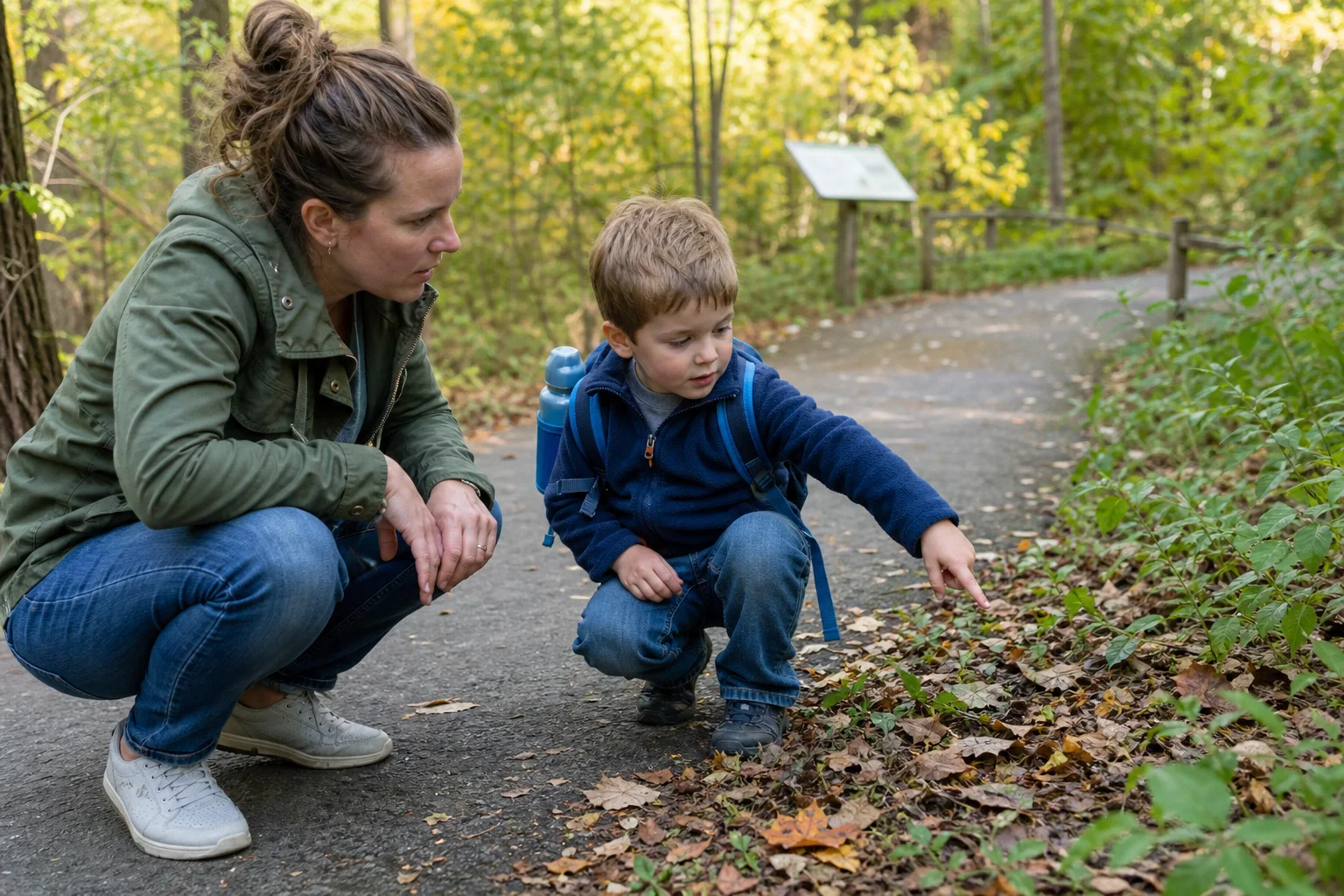
A short nature mission
A four-year-old does not need a long trail. Choose a flat loop or garden path and look for three leaf shapes, three colors, two bird sounds, or one interesting texture.
Leave natural items where they are when the park asks visitors not to collect them. Turn around while the child still has enough energy for the walk back.
Quick checks
- Flat, short route with an easy turnaround
- One finding or listening mission
- Enough energy and water for the walk back
Guide 5
Open gym or a beginner movement class
Look for preschool open gym, beginner gymnastics, dance, swimming, soccer, or movement play. Ask whether the class is built for four-year-olds, whether the caregiver joins, how much time children wait, and what happens when a child watches instead of joining at first.
A drop-in session is the easiest way to test the instructor, room, noise, and group format before paying for a term. A child who loves swimming may not love a loud pool lesson at that time of day.
Quick checks
- Class is built for four-year-olds
- Short waits and a clear caregiver role
- Trial or drop-in offered before enrollment
Guide 6
Make something or visit a few animals
Pottery painting, a children’s art table, a hardware-store build, or a nature-center craft can work when the child can make real choices. Pick a project they can mostly do alone, with washable materials and a clear cleanup.
A farm, aquarium room, nature center, or compact zoo loop gives a four-year-old plenty to talk about without a full-day visit. Pick three animals to find.
Check feeding schedules, hand-washing, shade, and walking distance, and do not promise animal contact unless the official page confirms it.
Quick checks
- Child can do most of the project
- Materials and cleanup fit the visit
- Animal route, hand-washing, and contact rules checked
Guide 7
Keep the visit short enough to end clearly
Many four-year-olds can enjoy 60–90 minutes at a playground, library, small museum, or open gym. A larger attraction can go longer with breaks, food, and a short route back to the exit.
Watch the transitions more than the clock. Fights over turns, aimless running, sudden hunger, or refusing every next choice usually mean it is time to go.
Say “two more slides,” “one last book,” or “we will finish this picture and wash our hands.” That is easier to understand than “five more minutes.”
For free or lower-cost outings, check libraries, city playgrounds, nature centers, free museum days, recreation-center resident rates, library passes, and Museums for All at participating museums. Free programs may still need registration.
Quick checks
- Plan about 60–90 minutes for an ordinary outing
- Use a visible last action instead of an abstract time warning
- Confirm registration even when the program is free
Choose without scrolling forever
- 1
Choose movement, pretend play, making, or one short nature mission.
- 2
Check that equipment and materials are meant for preschoolers.
- 3
Keep waits short and bathrooms close.
- 4
Try a drop-in before paying for a full class term.
- 5
Use one visible last action when it is time to leave.
Before you leave the house
- Preschool age range and equipment checked
- One first activity chosen
- Hours, tickets, or registration confirmed
- Bathroom and hand-washing location checked
- Weather, surface, and walking distance checked
- Water, snack, layer, and spare clothes packed if needed
- Visit can fit in about 60–90 minutes
- One visible last action is ready for the exit
Frequently asked questions
What can I do with my 4-year-old near me?
Try a preschool playground, library children’s room, hands-on museum, short nature walk, open gym, beginner movement class, make-and-take activity, or small animal outing. Check the exact age range before leaving.
What activities hold a 4-year-old’s attention?
Movement, pretend play, a simple job, or materials they can control often work well. Keep waiting short and choose a place where you can leave without a long walk back.
Are classes good for four-year-olds?
They can be when the class is designed for the age, has limited waiting, and uses play and movement. A trial or drop-in helps you check the instructor and group first.
Where can I take a 4-year-old for free?
Start with public libraries, city playgrounds, nature centers, free museum days, and community recreation programs. Some museums also offer reduced admission through access programs.
How long should an outing with a 4-year-old last?
About 60–90 minutes works for many ordinary outings. The right length depends on the child, travel time, food, and waiting. End while they can still manage the trip home.
What should I look for in a playground for a 4-year-old?
Look for equipment intended for ages 2–5, protective surfacing, clear sight lines, a manageable exit, and bathrooms or hand-washing nearby. Stay close enough to see how your child uses the equipment.