Guide 1
What holds their attention at three
Most 3-year-olds are past the very young toddler stage. Most are not ready for waiting, long instructions, or a finished craft that has to match the example.
They need a clear way into the play and a choice about how involved to be. Water tables, blocks, pretend kitchens, animals, chalk, and simple music give them something to touch or copy.
Small choices such as “slide or sandbox first?” work better than a huge venue with twelve directions.
Some children will join other kids; playing alongside still counts. One loop, one room, or one playground zone also makes the ending easier to understand.
Quick checks
- Choose an activity they can begin without waiting.
- Offer one small choice at a time.
- Keep a bench, reading corner, stroller, or snack table nearby.
Guide 2
A playground with a preschool zone
Bigger is not always better. A smaller structure with low climbing steps, a short slide, swings, sand, and a clear edge often holds attention longer than a destination playground built for older kids.
Can you see the whole play area from one spot? If bigger children share it, weekday mornings or the first hour after opening are often easier.
Quick checks
- Look for low equipment and a clear preschool area.
- Check whether one adult can see the whole play zone.
- Try a quieter hour when older children share the space.
Guide 3
A library children’s room
There is no pressure to stay. Let them choose books, find a puzzle or train table, and walk one lap of the shelves.
Storytime can be lovely, but an ordinary library visit is still an outing. If they dislike sitting in a group, arrive after storytime.
The room may be calmer, and the visit does not become a listening test.
Quick checks
- Check the branch calendar before choosing storytime.
- Let the child pick one book or table activity first.
- Leave when the room stops working rather than adding another activity.
Best options by situation
| Situation | Best option | Why it works | Watch out for |
|---|---|---|---|
| They need to run | Preschool playground, open gym, or short scooter path | Movement starts immediately. | Check age zones, boundaries, and bathrooms. |
| They want to pretend | Children’s museum room, play café, or library play corner | Props give the play a simple story. | Check crowds, session length, and admission. |
| They are curious but low-energy | Aquarium section, nature center, or small museum | There is plenty to notice without constant movement. | Dark rooms, loud exhibits, and stroller rules may matter. |
| You only have 30 to 45 minutes | Library, familiar park, garden loop, or pet-store fish aisle | The activity is easy to start and easy to stop. | Check hours and parking before making the short trip. |
| The weather is difficult | Indoor play room, library, museum, or community center | Temperature and bathrooms are more predictable. | Check drop-in rules, socks, booking, and noise. |
| You need a free option | Park mission, library, community garden, or public art walk | The small job becomes the activity instead of a ticket. | Check shade, route length, and event schedules. |
Guide 4
One museum room, not the whole building
A grocery-store setup, water table, building area, light wall, or vehicle exhibit can fill an hour by itself. Covering every floor usually makes a harder exit without adding much extra fun.
Before buying a ticket, check timed entry, whether there is a toddler or preschool zone, a quiet space, and somewhere to eat a snack.
Quick checks
- Choose one exhibit before you arrive.
- Check timed entry and preschool-area rules.
- Find the bathroom and snack spot near that exhibit.
Guide 5
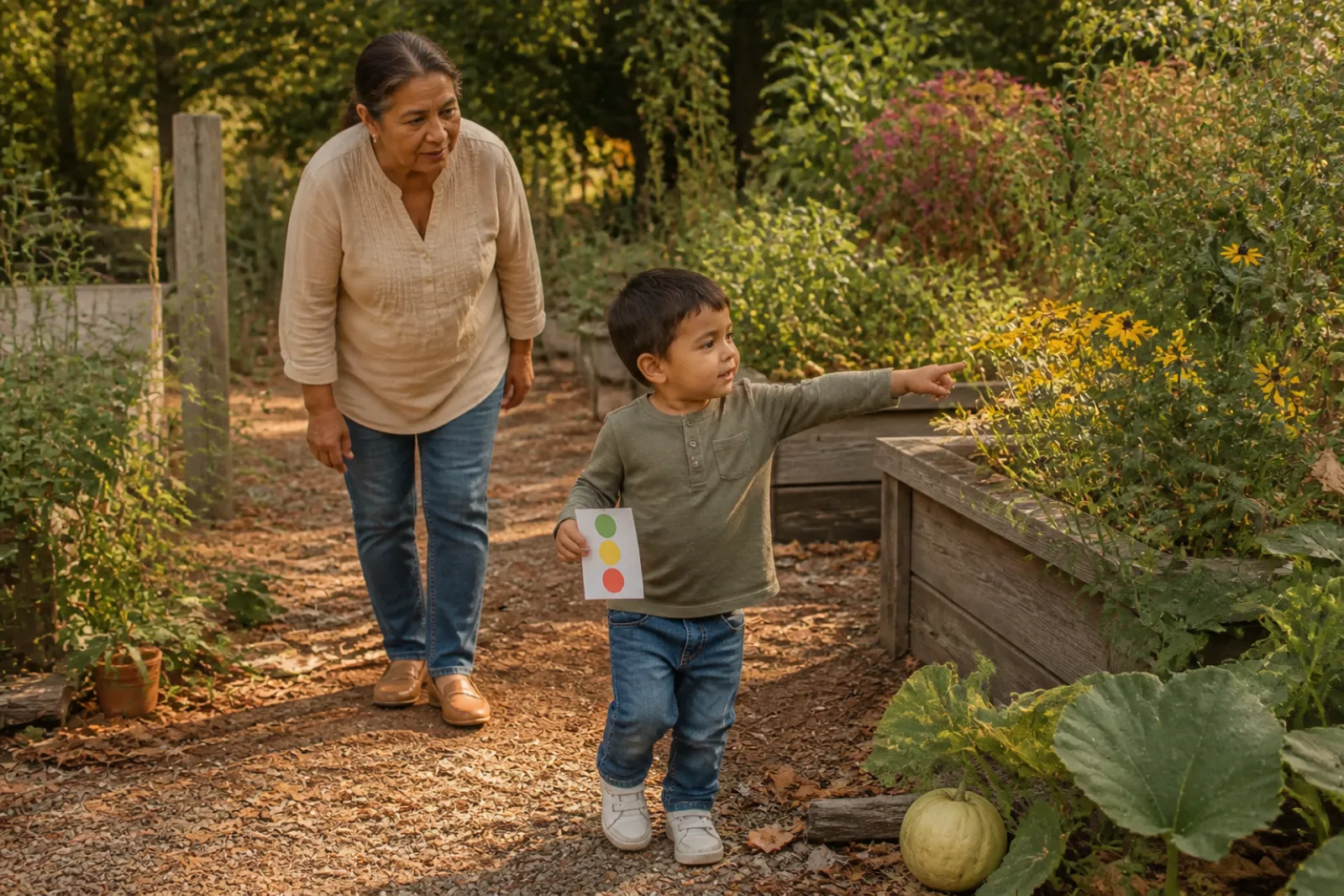
Give a nature walk one small job
“Go for a walk” is vague at three. Ask the child to find something yellow, something rough, and something that moves.
Count three dogs or five red leaves. Look for a bridge, a bird, and a very small flower, or let them choose one photo to take.
Use a short loop with a clear turnaround. Stop while it still feels like a game.
Quick checks
- Choose a mission with three or fewer things to find.
- Use a short loop with a visible turnaround.
- Let the child lead the noticing rather than correcting every answer.
Guide 6
Community open gym or a movement session
Open gym, preschool gymnastics, dance-and-move sessions, and recreation-center play mornings help on high-energy or bad-weather days. A drop-in is a better first test than a long class series.
Read the age range. A general “kids” session may be full of fast school-age children, while a preschool session usually has smaller equipment and a slower pace.
Quick checks
- Try a drop-in or trial before paying for a series.
- Confirm the session is designed for preschool ages.
- Check socks, booking, and adult-participation rules.
Guide 7
A garden, farm, or animal stop
Botanical gardens, small farms, duck ponds, and animal exhibits give a 3-year-old plenty to talk about. Pick one focus: smell three herbs, find the biggest leaf, watch one animal eat, or choose a favorite flower color.
Confirm the walking distance, stroller rules, and whether feeding or petting runs on a separate schedule.
Quick checks
- Choose one animal or garden focus.
- Check the total walk and easiest turnaround.
- Confirm feeding, petting, and stroller schedules separately.
Guide 8
A make-and-take activity
Look for library crafts, pottery painting, children’s art rooms, hardware-store workshops, or a table for drawing and sticking. The finished object does not need to match the sample.
The useful setup at this age has chunky materials, a short process, and permission to stop. Skip sessions where the adult ends up completing a fiddly project while the child waits.
Quick checks
- Choose chunky materials and a short process.
- Check whether the child can stop without waiting for a group.
- Do not make matching the sample the goal.
Guide 9
How long should you stay?
Allow about 30 to 45 minutes for a library, familiar playground, short garden loop, or quick craft. An open gym, small museum section, nature center, or play café may fill 45 to 75 minutes.
Save 90 minutes or more for a zoo, aquarium, large museum, farm, or destination park with a snack break. Use the activity, not the ticket price, to decide the length.
If the first 40 minutes went well, that was the outing. Save the big venue for another day if the child is already tired, the drive is longer than the likely playtime, or most of the activity is waiting for a turn.
Quick checks
- Keep the drive in proportion to the likely playtime.
- Plan the snack and bathroom around the visit length.
- Leave before tiredness turns the exit into the hardest part.
Choose without scrolling forever
- 1
Match the outing to today's energy and weather.
- 2
Choose one place with movement, pretend play, nature, or making.
- 3
Check hours, bathrooms, and any age rules.
- 4
Keep one simpler backup ready.
- 5
Leave before hunger or tiredness takes over.
Before you leave the house
- Today's energy and weather checked
- One main activity chosen
- Hours and age rules confirmed
- Bathroom plan checked
- Snack, water, and spare clothes packed
- Easy backup ready
Frequently asked questions
What can I do with my 3-year-old near me?
Try playgrounds, library children’s rooms, open gyms, small museum exhibits, nature centers, gardens, farms, and short art activities. Match today’s energy and weather rather than choosing only by attraction size.
What holds a 3-year-old’s attention?
Pretend play, water, sand, blocks, animals, music, short stories, simple crafts, and small finding games are useful starting points. Choose a place where switching activities or leaving early is easy.
How long should the outing last?
About 45 to 75 minutes works for many everyday trips. A zoo, aquarium, or large museum can go longer when there are breaks, food, bathrooms, and a clear route back to the exit.
Are structured classes good for 3-year-olds?
They can be when the class has movement, short instructions, and room to watch before joining. Try a drop-in or trial before paying for a full series.
Where can I take a 3-year-old for free?
Try libraries, playgrounds, community gardens, public art walks, nature trails, free museum days, recreation-center events, and simple park missions. Check calendars and registration first.
What should I bring?
Water, a small snack, wipes, and clothes for the weather cover many short outings. Add spare clothes for water, sand, paint, or messy play.