Guide 1
Start with no-prep park games
The easiest creative park activities are the ones you can kick off with absolutely nothing in your bag. Try a simple color hunt.
Ask your child to find something red, something round, something tall, or something tiny. You can do the same thing with shapes, textures, or sounds.
This works because preschoolers love a clear mission, and it gets them to actually notice the park instead of just tearing through it. Another easy win is a playground challenge.
Ask them to go down the slide, touch a bench, walk around a tree, and come back to you. Keep it short: two or three steps is plenty.
If they're into it, let them create the next challenge for you. These small games work because they don't fight the park.
They use what's already there.
Quick checks
- Use colors, shapes, textures, or sounds as the mission.
- Keep the task to two or three steps.
- Let your child create the next challenge if they are engaged.
Guide 2
Turn the playground into a mini obstacle course
Preschoolers love feeling like the park was built just for them. A simple obstacle course gives them exactly that, with no cones, signs, or equipment needed.
Pick three safe actions: climb the steps, cross the bridge, go down the slide. Or walk along the edge of the path, hop to the tree, then run back to the picnic table.
The point isn't speed. The point is giving the outing a little structure.
If your child is still working on listening and following directions, this kind of play is a quiet win. It builds sequencing, balance, and confidence while still feeling like regular park fun.
Make it easier by doing the first round together. Then ask, what should the course be next?
That one question usually turns a five-minute activity into twenty.
Quick checks
- Pick three safe actions and do the first round together.
- Focus on sequence and confidence, not speed.
- Change the course when attention starts fading.
Guide 3
Bring one small item to make the park feel new
You don't need a bag full of toys. One small item can change the entire park trip.
A toy car can race down a slide. A small ball can roll down a hill.
A bubble wand can turn an open field into a chase game. A measuring tape can make every stick, rock, and bench suddenly fascinating.
Sidewalk chalk can turn a path into hopscotch, a road, or a pretend map. The trick is to bring one thing, not ten.
Too many toys make the outing harder to manage. One small item gives your child a starting point and keeps the day simple.
This is especially helpful when your preschooler announces the park is boring thirty seconds after you arrive.
Quick checks
- Bring one item only: bubbles, chalk, a toy car, or a small ball.
- Choose the item based on the space you expect to use.
- Put it away when it starts creating conflict.
Best options by situation
| Situation | Best option | Why it works | Watch out for |
|---|---|---|---|
| Arrived with no toys or plan | Color hunt or playground challenge | Uses what is already at the park and starts immediately. | Too many instructions can make preschoolers drop the game. |
| Kids need movement and structure | Mini playground obstacle course | Turns normal equipment into a fresh, active game. | Skip crowded or slippery equipment. |
| The usual park feels boring | One small prop | Adds novelty without turning the outing into a production. | Too many toys make sharing and cleanup harder. |
| Need calmer outdoor play | Nature hunt or sound walk | Slows the outing down while still feeling like a game. | Avoid unsafe plants, water edges, and fragile habitats. |
| Leaving the park is usually hard | Calm goodbye activity | Helps the transition feel planned instead of sudden. | Do not make the ending activity too exciting. |
Guide 4
Use nature as the activity
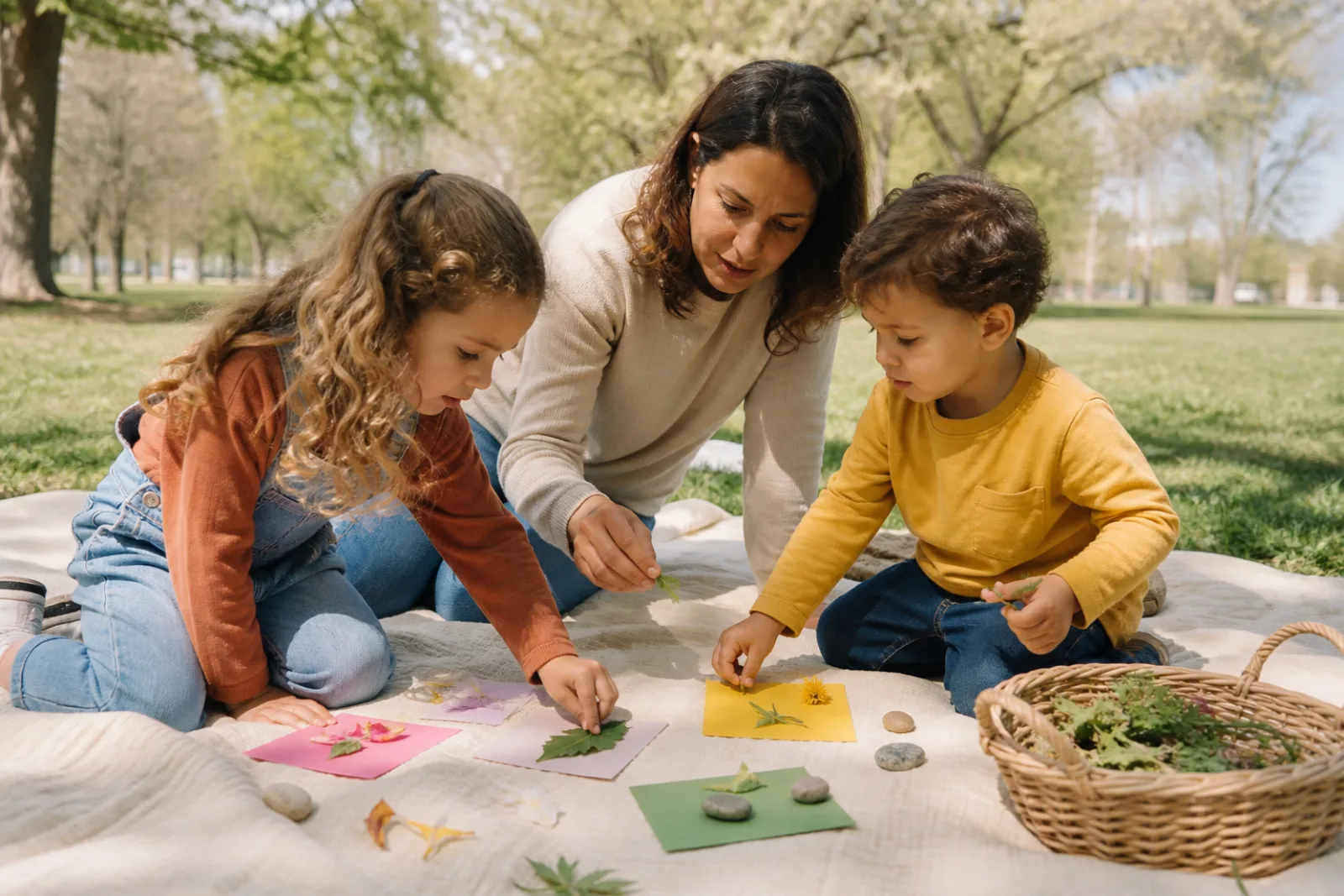
A park doesn't need a big playground to work for preschoolers. Some of the best activities happen around the edges: under trees, along a walking path, or near a patch of grass.
Try a nature collection with simple rules: find one smooth leaf, one bumpy stick, one small rock, and one thing you're not allowed to pick up but can point to. That last rule matters because it teaches observation without turning the whole park into a take-home pile.
You can also try a sound walk. Stop for ten seconds and ask, what can we hear?
Birds, trucks, wind, sprinklers, other kids, footsteps. Preschoolers often notice way more than adults expect when the task is small enough.
These easy nature activities for kids work because they slow the outing down without making it feel like a lesson.
Quick checks
- Try a leaf, stick, rock, or sound mission.
- Teach pointing and observing instead of collecting everything.
- Use walking paths or tree edges when the playground is busy.
Guide 5
Save one calm activity for the end
The hardest part of a park trip usually isn't the beginning. It's leaving.
That's why it helps to save one calm activity for the end. Before heading home, ask your child to pick a favorite leaf, choose the best stick to say goodbye to, draw one chalk shape, or take one last slow walk around the path.
This gives the outing a softer landing. Instead of jumping straight from full-speed play to we have to leave now, you give their body a minute to come down.
For preschoolers, that transition can mean the difference between a great park day and a parking-lot meltdown.
Quick checks
- Announce one last calm task before leaving.
- Use chalk, a slow walk, or a goodbye-to-the-park ritual.
- Leave before full-speed play restarts.
Guide 6
How to choose the right park activity today
If your child has a lot of energy, start with movement: obstacle course, bubble chasing, hill rolling, or a slide race. If they seem scattered, start with a mission: color hunt, shape hunt, or a two-step playground challenge.
If they're bored with the usual playground, bring one small item that changes how they use the space. If the day is already fragile, keep it simple.
A short walk, one nature find, and a calm goodbye activity may be all you need. The best creative park activities for preschoolers aren't the most elaborate ones.
They're the ideas that help a simple park trip fit the child you actually brought with you today.
Quick checks
- Use movement when energy is high.
- Use a small mission when attention is scattered.
- Use a calm ending when the transition home matters most.
Choose without scrolling forever
- 1
Choose the kind of day you actually have.
- 2
Use the table to pick the best option.
- 3
Check the quick checks before leaving.
- 4
Confirm practical details once the activity type is clear.
- 5
Save one backup in case weather or energy changes.
Before you leave the house
- Enough time for the drive and visit
- Restrooms, parking, and shade checked
- Indoor or low-effort backup saved
- Hours, calendar, or registration confirmed
- Kids' age and energy fit the outing
- Budget still fits after tickets, parking, or supplies
Frequently asked questions
What are the best creative park activities for preschoolers?
The best options are simple activities that use what's already at the park: color hunts, playground obstacle courses, slide races with toy cars, bubble chasing, nature collections, and sound walks. No elaborate setup is required.
What can I do at the park with a preschooler without any toys?
Try a color hunt, shape hunt, playground challenge, walking-path mission, nature observation game, or a simple obstacle course. Preschoolers usually thrive with short tasks that make the park feel like a game.
What should I bring to the park for preschool-age activities?
Bring one small item, such as bubbles, sidewalk chalk, a toy car, a small ball, or a measuring tape. One item is usually enough to make the park feel new without making the outing harder to manage.
Are playground activities actually good for preschoolers?
Yes. Playground activities help preschoolers practice balance, sequencing, listening, turn-taking, and confidence. The key is keeping the activity short, safe, and flexible enough to follow their lead.
How do I make a regular park trip more fun for my preschooler?
Give the outing a tiny mission. Ask your child to find three colors, build a simple obstacle course, race a toy car down the slide, listen for five sounds, or pick one calm goodbye activity before leaving. Small structure goes a long way.