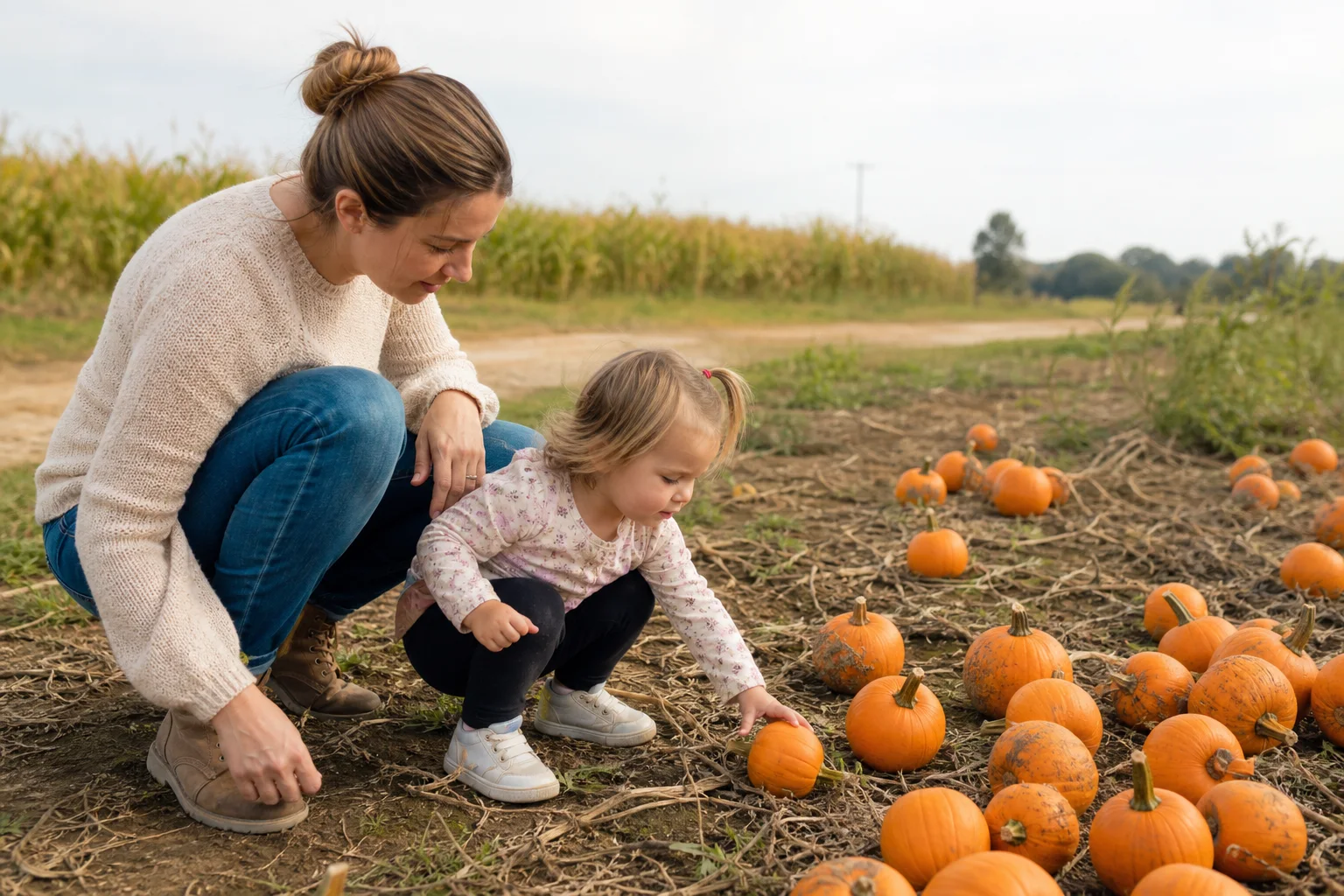
Your toddler doesn't need the biggest pumpkin farm in the county. A nearby patch with pumpkins at ground level, a short walk, bathrooms, and one small extra activity often beats a crowded festival by a mile.
Check what the ticket price actually covers before you buy. Some pumpkin patches are basically a farm stand with a field out back. Others are full seasonal amusement parks where picking a pumpkin is almost an afterthought.
Pick the patch that fits today's toddler
Match the place to the kid you actually have, not the place with the longest activity list.
| Today’s child | Better fit | Maybe skip |
|---|---|---|
| New walker | Flat patch, pumpkins close to parking, short visit | Large field reached only by wagon |
| Runner | Fenced or clearly bounded play area, two adults if possible | Open parking edges and long admission lines |
| Crowd-sensitive | Weekday morning, small farm stand, quiet pumpkin display | Weekend festival with music and rides |
| Tractor fan | One short hayride or visible farm equipment | An expensive package built mostly around photo sets |
| Easily tired | One main activity and fast exit | A timed schedule with several prepaid attractions |
If your toddler would be just as happy grabbing a pumpkin off a farm-market table, that counts as a real fall outing. The best trip is the one your family can finish without dragging everyone through a bunch of paid extras first.
Add up the real cost before you promise a big day
Look for separate prices for:
- general admission
- parking
- pumpkins by size or weight
- hayrides or train rides
- play areas and jumping attractions
- animal feed
- food and drinks
Confirm the age cutoff for a ticket. "Children's admission" doesn't always mean toddlers get in free. Check whether pumpkins are included in the price and whether online booking adds fees at checkout.
For a first visit, compare the total against a smaller patch or farm stand. A toddler who's happy after forty-five minutes doesn't need an all-day package.
Work around nap time, not against it
Pick a time that doesn't hinge on the toddler skipping a nap. If the farm opens in the morning, get there near opening instead of hoping a crowded afternoon somehow works out.
Feed the child a normal snack before the most exciting part of the visit, but only in a designated food area. Bring water and find out whether outside food is allowed. Keep one familiar snack in the car for the ride home.
Skip the automatic restaurant stop. A toddler who held it together through parking, a wagon ride, and a pumpkin field might genuinely be done once the patch is behind you.
Check the ground before you pick a stroller
Farm photos rarely show the whole route. Ask directly whether the path includes gravel, grass, deep dirt, mud, hills, or a climb onto a wagon.
A stroller works best when:
- parking and bathrooms are connected by a firm path
- wagons have a clear stroller policy
- there is a safe place to leave it during an activity
- the toddler may need a contained break
A carrier can be easier on uneven ground at a small patch. For a heavier toddler or a longer visit, confirm the route ahead of time instead of assuming you can just carry the kid back.
Scale the pumpkin picking down to toddler size
Let the toddler touch and compare pumpkins that are already sitting on the ground. Offer two options instead of sending them off to find the "perfect" pumpkin in a huge field.
Give them one small job:
- find a pumpkin smaller than the child’s head
- choose between a smooth and bumpy pumpkin
- point to one orange and one different-colored pumpkin
- help an adult count three pumpkins
Leave stem-cutting, lifting the big pumpkins, and loading the cart to the adults. Keep toddlers away from stacked displays they could pull down or climb.
Treat the petting area as its own decision
If the patch has farm animals, decide before you walk in whether that's part of the plan. Keep snacks, cups, pacifiers, and toys out of the enclosure.
The CDC notes that animals can carry germs even when they look perfectly clean. Wash hands with soap and running water after touching animals or anything in their space, and stay close while a child under five washes up. Don't let a toddler put fingers near an animal's mouth or stand behind one.
No handwashing station nearby? Skip direct contact and just watch from outside the fence.
A 75-minute plan that keeps things simple
The exact timing depends on the farm, but this order works well:
- Bathroom or diaper change after arrival
- Walk through the pumpkins before lines grow
- Let the toddler choose one pumpkin
- Wash hands if the child touched animals or farm surfaces
- Do one extra activity
- Take the family photo on the way out
Skip the long photo session at the start. Let the toddler get a feel for the place first, then grab one quick picture without turning it into the main event.
Dress for the field, not for the photo
Closed shoes with real traction, plus clothes that can take dust, grass, and pumpkin dirt. Bring a light layer, sun protection, and a spare outfit. If it rained recently, check whether the patch is closed or has turned to mud.
Skip costumes with long hems, capes, or shoes that only work for pictures. Save the dress-up clothes for a paved display or for home.
Know when the smaller plan wins
A farm stand, garden center, or grocery-store pumpkin display is the right call when the main farm is too far, too expensive, too crowded, or badly timed for your kid's sleep schedule.
Pick one pumpkin, walk around the display, and decorate it at home with washable paint or big stickers. Your toddler still gets a real fall experience, minus the ticket package, the parking field, and the long walk back to the car.
Frequently asked questions
Is a pumpkin patch worth it for a toddler?
It can be, if the drive, price, walking route, and visit length actually fit the kid. A small patch with one extra activity often gives a toddler plenty to do without an all-day ticket.
What is the best age for a pumpkin patch?
A walking toddler can enjoy pumpkins at ground level, a short wagon ride, or farm animals. Check whether the attraction is actually built for that age instead of trusting a general family-friendly label.
What should a toddler wear to a pumpkin patch?
Closed shoes with traction, and comfortable layers that can handle dust or mud. Bring sun or rain protection and a spare outfit.
Can I bring a stroller to a pumpkin patch?
Some patches allow them, but grass, mud, gravel, hills, and wagon loading can make a carrier the easier option. Confirm the actual field route and stroller policy before you go.
How long should I stay at a pumpkin patch with a toddler?
Plan a short visit built around choosing a pumpkin plus one extra activity. Stay longer only if the toddler still has energy and getting back to the car stays manageable.