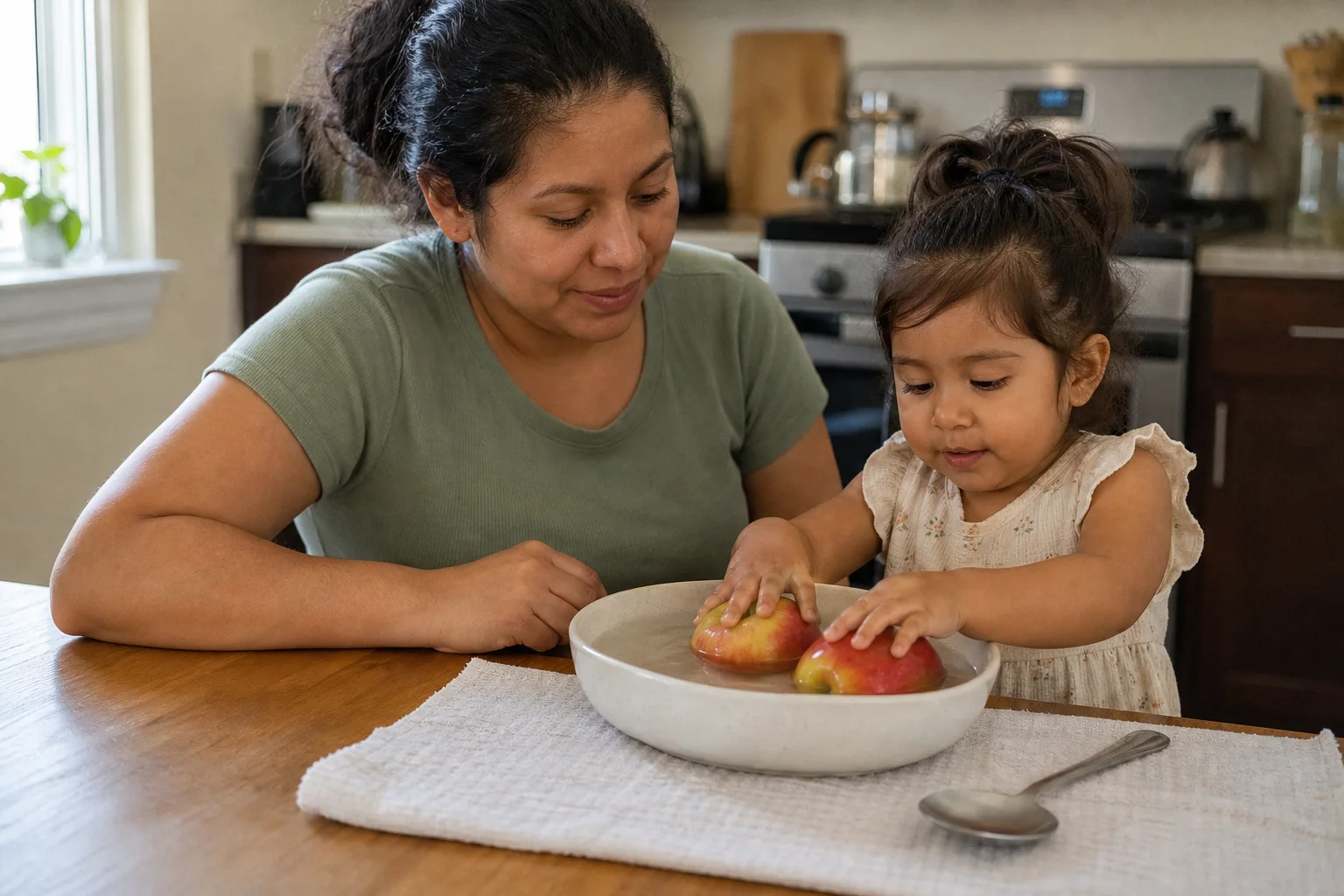
Fall sensory play doesn't need a bin full of rice, dried corn, acorns, or tiny plastic pieces. For a toddler, big everyday materials are just easier to supervise, and usually easier to clean up too.
Pick one activity below and set it up wherever your toddler already plays. Most take about five minutes to prep and can end the moment the child loses interest.
Clear out the small stuff first
Get rid of anything small enough to end up in a toddler's mouth. That means dried corn, acorns, mini decorative gourds, pom-poms, water beads, button batteries, and loose magnets — all off the table.
The U.S. Consumer Product Safety Commission warns that small parts can cause choking, aspiration, or ingestion hazards in children under three. The CPSC also advises against letting children play with water beads at all, since a swallowed bead can expand and cause serious internal injury.
Stick with large paper shapes, full-size washcloths, sealed containers, whole apples an adult is supervising, and sturdy toys already rated for the child's age. Stay within arm's reach during any water play, and empty the water the second the activity's over.
Activity 1: Wash a couple of apples
Set a towel under a shallow bowl with a small amount of water. Add two whole apples, a washcloth, and a big spoon.
Let the toddler wash, flip, pour water over, and dry the apples. Narrate the contrasts as they come up: wet and dry, cool and warm, smooth and bumpy.
Keep the apples whole the whole time. An adult washes and cuts them later if they're going to be eaten. Wrap it up if the child bites an unwashed prop, lifts the bowl, or keeps pouring water straight onto the floor.
Activity 2: Roll a small pumpkin back and forth
Grab one firm, uncarved pie pumpkin and use it on a rug or clear floor. Sit facing the child and roll it slowly between you.
Three ways to mix it up:
- stop it with two hands
- roll it to the left or right of a paper leaf
- push it slowly, then a little faster
Skip anything heavy enough to hurt toes or dent the floor. Check that the stem isn't sharp or loose, and don't let the child lift the pumpkin above foot level.
Activity 3: Build a paper-leaf wall
Cut large leaf shapes out of colored paper. Tape a wide sheet of contact paper to a wall or window with the sticky side facing the child, and keep every tape edge out of reach.
The toddler presses the leaves on, peels them off, and moves them around. Only use pieces too big to fit in the mouth, and count them before and after play.
No contact paper on hand? Tape the leaves straight onto a large cardboard box and let the child move them around with reusable tape loops an adult sets up ahead of time.
Activity 4: Sort fall colors into big piles
Lay three sheets of paper on the floor: orange, yellow, brown. Gather large items your toddler already handles, like washcloths, stacking cups, board books, or chunky blocks in similar colors.
Let the child put each object wherever they want. Don't correct every placement. Just narrate what you notice: "You put the soft yellow cloth there."
Drop it to two colors for a younger toddler. For an older one, add a basket and ask them to deliver one object at a time.
Activity 5: Act out fall weather
Grab two light scarves or dish towels. An adult calls out a weather idea and moves along with the child:
- breeze: sway slowly
- wind: walk quickly while holding the scarf low
- falling leaf: turn once and crouch
- rain: tap knees with fingertips
- still day: freeze and listen
Keep the fabric away from the face and neck, and stick to open floor, not stairs, beds, or furniture.
Activity 6: Go on a listening walk
Take your usual stroller or walking route and stop at three familiar spots. Listen for a bird, a passing car, footsteps, wind, a door, or leaves rustling.
The child can point, mimic the sound, or pick which one was loudest. Nothing gets collected, so this works even where the leaves never turn color and in neighborhoods without a yard.
Keep the walk short enough that the trip home is still easy. Try the same three stops again another day and see what's different.
Activity 7: Make a sealed sound bottle
Only an adult touches the filling materials for this one. Put a small amount of dry rice in a sturdy clear plastic bottle, close the cap, and secure it so the child can't get it open. Check the bottle and cap before every use.
The toddler shakes it softly, rolls it across the rug, or moves it along to a song. The rice stays sealed inside, and the bottle gets tossed the moment it cracks, leaks, or the cap loosens.
If a homemade sealed toy isn't your thing, a child-safe musical shaker rated for the toddler's age does the same job.
Activity 8: Paint a big paper tree
Draw a simple tree trunk on a large sheet of paper. Put a small amount of washable, non-toxic finger paint on a washable tray, and let the toddler make broad marks for leaves with a hand, sponge, or big brush.
Stick to one or two colors instead of a whole row of open paint pots. Keep the paint within your reach, protect the floor, and wash hands when the child's done.
For less mess, swap in chunky crayons and let the toddler make short marks around the branches instead.
Match the activity to the energy in the room
| The toddler seems | Try first | Keep it short by |
|---|---|---|
| Curious and calm | Apple wash or paper-leaf wall | Offering one material at a time |
| Restless | Pumpkin roll or fall-weather movement | Ending after three rounds |
| Tired | Color sort or sound walk in a stroller | Using only two choices |
| Eager to make a mess | Paper tree painting | Limiting paint and using a washable area |
| Mouths everything | Movement or listening walk | Avoiding loose sensory materials entirely |
The activity is over when the child wanders off, starts throwing things, keeps mouthing items, or needs more correcting than exploring.
Keep one fall kit ready to grab
Store large paper leaves, painter's tape, two scarves, chunky crayons, and a washable cloth in a folder or tote. Toss in apples and a small pumpkin whenever you happen to have them.
Repeat the same activity with one small change each time. New colors on the wall, a new target for the pumpkin roll, a different corner for the listening walk. Toddlers don't need eight brand-new setups in a single week.
Frequently asked questions
What are safe fall sensory activities for toddlers?
Use large materials and stay close: wash whole apples, roll a light pumpkin, move large paper leaves, sort full-size household items, paint on big paper, or take a listening walk.
Can toddlers play with dried corn or acorns?
Small loose items are choking and ingestion hazards, especially for kids under three and anyone still mouthing objects. Reach for large paper, fabric, or age-appropriate toys instead.
Are water beads safe for toddler sensory play?
No. The U.S. Consumer Product Safety Commission advises against letting children play with water beads at all, since a swallowed bead can expand and cause serious injury.
How long should a toddler sensory activity last?
Let it end whenever the child walks away, throws materials, mouths items, or needs constant correction. Five minutes is plenty for a useful activity, and some go much longer.
What fall activity works if leaves do not change color where we live?
Try an apple wash, pumpkin roll, paper-leaf wall, fall-color sort, weather movement game, or neighborhood listening walk. None of these depend on finding colorful leaves outside.