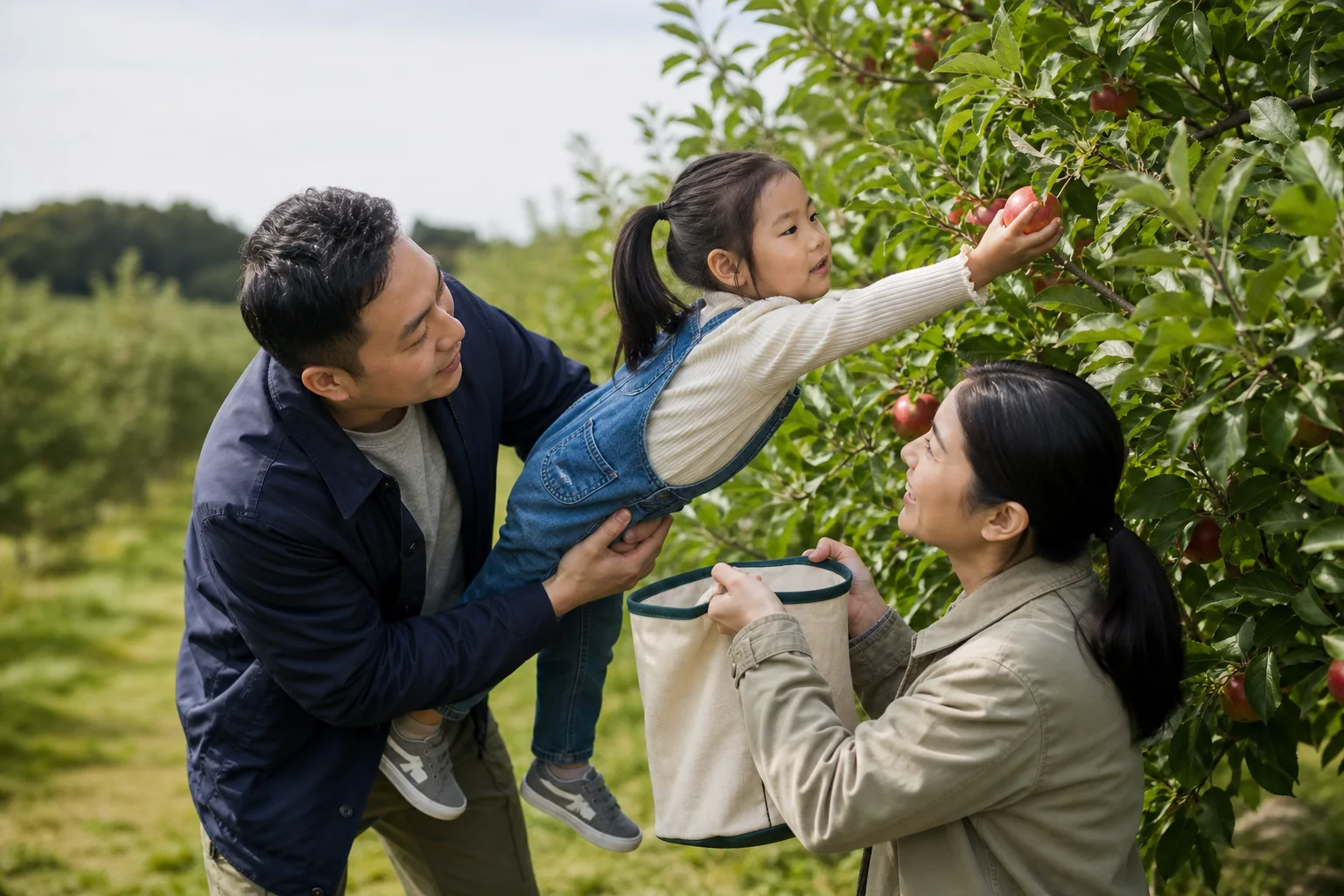
An orchard trip can turn into anything from a quick fifteen-minute pick to a full day of wagon rides, food lines, and a hike from the parking field to the trees. Before you tell the kids you're going apple picking, figure out which version you're actually signing up for.
Start with the orchard's official crop update. Apple varieties ripen on their own schedule, so a place can be "open" while the pick-your-own rows are thin or closed for the day.
Decide what kind of orchard visit you want
Check the official website, or just call, and pin down the main reason for the trip.
| Your family wants | Look for | Check before paying |
|---|---|---|
| A short first visit | Parking close to the picking area, a small minimum purchase, bathrooms | Whether a wagon ride is required to reach the trees |
| A toddler morning | Short walking route, low branches, handwashing, a quiet place for a snack | Stroller rules, animal areas, weekend crowds |
| A full fall day | Picking plus play areas, food, hayride, or farm animals | Separate activity tickets and total walking |
| A budget visit | Free entry or pay-by-the-bag picking | Parking fees, required bags, minimum purchase |
| Mixed ages | Easy picking for the youngest and one extra activity for older children | Height, age, and closed-shoe rules |
Skip the big attraction package if your kids really just want to pick a few apples and head home. A smaller farm stand with a short U-pick row is often the better call.
Read the crop update, not just the opening hours
"Open" doesn't mean every apple in last year's photos is actually ready to pick. Check:
- the date of the latest crop update
- which varieties are available for picking
- whether reservations are required
- the final admission time for U-pick
- whether picking can stop early when a field reaches capacity
- whether rain changes wagon or field access
If the orchard posts updates on social media, go with the newest one, and double-check it's actually about the location you're headed to. Save the phone number too, in case conditions change while you're on the road.
Work out the real price
Orchards charge in all kinds of ways: admission, per container, by weight, or an activity pass. Some make every picker buy a bag; others toss in a set amount of fruit with admission.
Before you leave the house, add up the cost for everyone going:
- Admission or parking
- Required picking bags or containers
- Wagon, play-area, or animal-feed tickets
- Food you expect to buy
- Apples beyond the included amount
Ask whether adults who are just supervising, not picking, still need to pay admission. And check the actual age cutoff for a ticket rather than assuming toddlers get in free.
Give young children one clear job
A preschooler doesn't need to fill up a whole bag. Give them one small job instead: pick between two ripe apples, count five into the bag, or track down one red and one green variety.
Walk kids through the orchard's picking method before they get started. No shaking branches, climbing trees, throwing fruit, or picking from closed rows. Let an adult carry the main bag, since a full one gets heavy fast and can throw a small child off balance.
With mixed ages, let the older kid read the row signs or hold the variety list while the younger one picks the next tree. Keep everyone together instead of letting kids scatter down separate rows.
Check the walking and stroller setup
"Stroller friendly" can just mean the market area is paved while the actual orchard is rutted and grassy. Ask about the real route from parking to the picking rows.
Check:
- whether a wagon is required and how strollers are loaded
- whether the field has hills, mud, long grass, or narrow rows
- whether a baby carrier would be easier
- how far the bathrooms are from the trees
- whether there is a place to leave a stroller safely
Stick to closed shoes that can handle dust or mud, and pack a change of clothes for a toddler if it's rained recently.
Keep food and animal areas separate
Some orchards have goats, chickens, or other farm animals on site. Locate the handwashing station before you go anywhere near them. The CDC recommends washing with soap and running water after touching animals or their surroundings, with an adult supervising handwashing for kids under five.
Keep snacks, bottles, pacifiers, and toys away from animal areas, and eat only after hands are washed. Hand sanitizer works as a stopgap when soap and water aren't available, but it's not a reason to skip the wash station once you reach one.
Use a short first-visit plan
For a toddler or preschooler, this order tends to work best:
- Bathroom before the field
- Pick one or two varieties
- Wash hands
- Have the planned snack
- Choose one extra activity, if energy is still good
- Buy anything else on the way out
Get the main picking done before the cider-donut line, playground, or animal area. Save the actual point of the trip for last, and a tired kid may never make it to the trees at all.
Bring only what helps in the field
Pack water, sun or rain protection, wipes for the usual messes, a spare toddler outfit, and a carrier if the ground isn't going to work for wheels. Stick to the orchard's approved containers unless their site specifically says personal bags are fine.
Leave the favorite loose toys in the car. They're too easy to lose in grass, wagons, and a crowded market area.
Have a smaller backup
If the crop update changes, the weather turns, or the parking line is already backed up, you can still salvage a fall outing. Head to the farm market instead, pick out two apple varieties, and take them home for a taste test or a batch of applesauce.
Penn State Extension suggests checking ahead with pick-your-own orchards and trying out different varieties, textures, colors, and tastes. The day doesn't need every paid attraction to count as a win.
Frequently asked questions
What is the best age to take a child apple picking?
A walking toddler can have fun on a short visit with low branches and one simple job to do. The better question is whether the orchard has a manageable route, bathrooms nearby, and a price that still makes sense for a short stay.
What should I bring apple picking with kids?
Water, weather protection, closed shoes, a spare toddler outfit, and a carrier if the field isn't stroller friendly. Also check whether the orchard requires you to use its own bags or containers.
Can I take a stroller into an apple orchard?
Some orchards allow it, but grass, hills, ruts, mud, and wagon loading can make a stroller more trouble than it's worth. Ask about the route to the actual picking rows, not just the market entrance.
How long does apple picking take with children?
A first visit can be done in about an hour if parking and the field are close together. Budget extra time separately for wagon rides, animals, play areas, food lines, and the walk back to the car.
How do I find an apple orchard near me that is open?
Search for a nearby U-pick orchard, then pull up its official crop update. Confirm the date, which varieties are available, reservation rules, the last picking time, and any weather notices before you drive out.