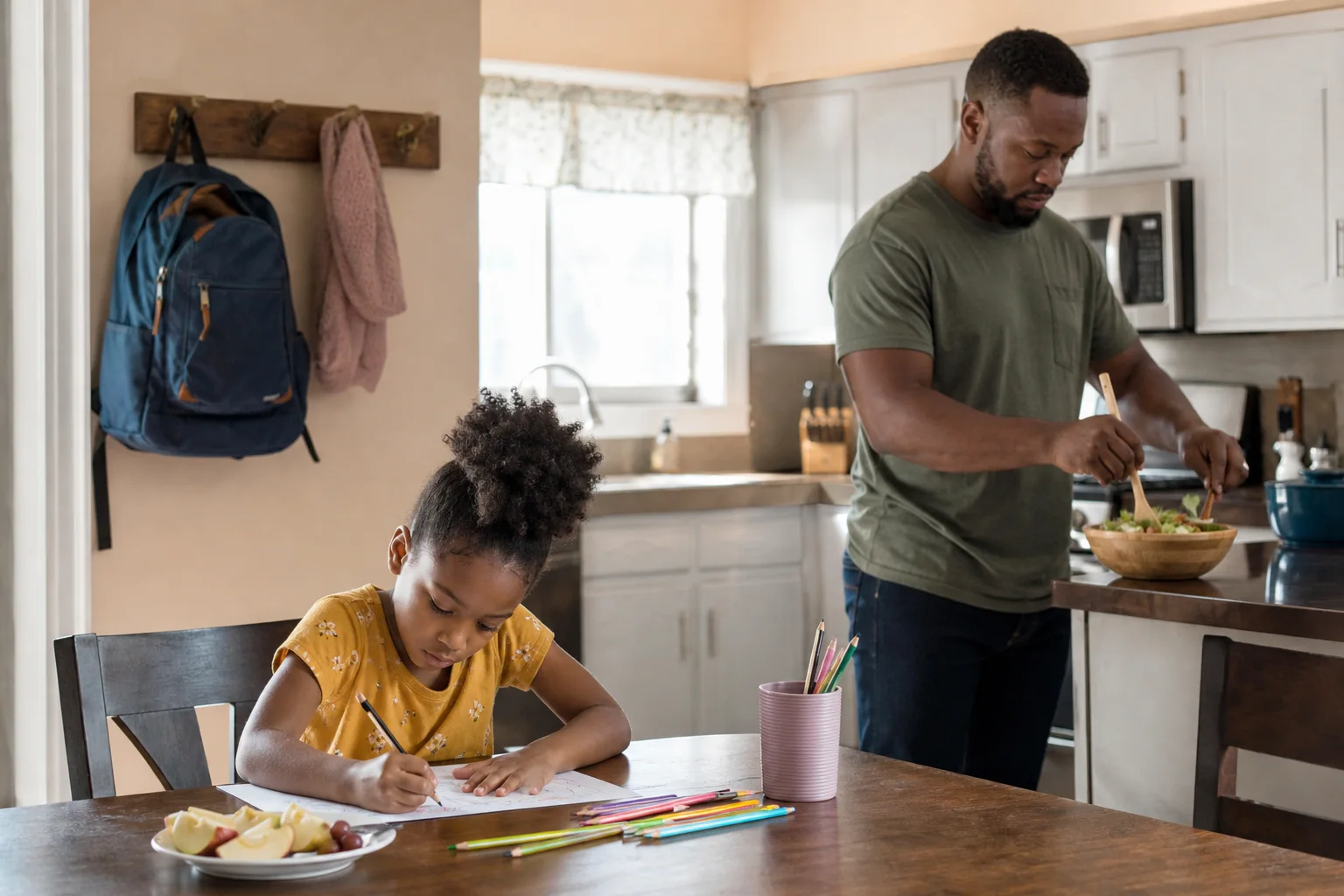
You don't need a new craft every afternoon. Most families do better with a routine the kids already know by heart: a landing spot, a snack, and two or three activities nobody has to explain from scratch.
Pick the activity by looking at the kid who just walked through the door, not by consulting a list. A tired kid usually needs quiet. A wound-up kid needs to move before homework starts. Whatever worked Tuesday might not work Wednesday, and that's normal.
Land the same way every day
Keep the first routine predictable even when the rest of the afternoon isn't:
- Put the backpack, shoes, and lunch items in their usual places.
- Wash hands and get the planned snack and water.
- Ask one useful question: “Quiet, movement, or company?”
- Choose from a short menu already visible to the child.
Skip "What do you want to do?" when everyone's running on fumes. Three concrete choices beat an open-ended question every time.
The American Academy of Pediatrics points out that some kids are ready to work right after school, while others need to decompress and play first. Watch what actually happens with your own child for a week or two, then stick with the order that gets the least pushback.
Give the afternoon four lanes, not a long list
A small menu holds up better than a giant one.
| What the child needs | Activity to offer | Adult setup |
|---|---|---|
| Quiet | Audiobook and drawing, puzzle, sticker scene, reading nook | Put one item on the table |
| Hands busy | Blocks, reusable modeling dough, paper-strip collage, cardboard build | Set a tray or box out |
| Whole-body movement | Hallway animal walk, balloon keep-up, dance for three songs, backyard laps | Clear one safe area |
| Company | Ten-minute card game, help wash produce, short walk, read one chapter together | Choose a clear stopping point |
Stick to activities the child has already done on a school day before. The multi-step science project or ambitious craft can wait for a weekend when an adult actually has time to help.
Quiet activities a kid can start alone
An independent activity needs a finish line. "Go play" can drag on forever; "finish this 24-piece puzzle" or "draw a room for this paper animal" gives the child something concrete to aim at.
A few that hold up well:
- an audiobook with blank paper and colored pencils
- one puzzle that is already out of the box
- a basket with a few books, not the entire shelf
- a sticker sheet and one folded card to decorate
- blocks with a single prompt, such as “build a bridge for this car”
- a comic page divided into four empty boxes
Keep the materials familiar and quick to put away. Swap in one or two new choices a week instead of dumping every option out at once.
Let them move without rearranging the living room
For a kid who's been sitting still and concentrating all day, a short burst of movement with a clear end works better than an open invitation to run around:
- keep a balloon off the floor for one song
- copy five animal walks down a clear hallway
- make ten rolled-sock shots into a laundry basket
- dance through three chosen songs
- ride a scooter or bike on the family’s usual safe route
- walk one block out and one block back
Only move furniture if an adult is right there checking the floor. Couches, tables, beds, and stairs are not jumping equipment.
If a kid gets more wound up instead of settling down, don't add another round. Switch to water, a snack, and something quieter.
Give them a real job near dinner
Some kids want company more than entertainment. Set them up next to whoever's cooking:
- wash produce in a bowl at the sink
- tear lettuce or herbs
- match container lids
- place napkins and unbreakable cups
- move safe ingredients from a tray to the counter
- draw a menu for the table
Pick a job that doesn't involve knives, a hot stove, or constant correction. The point is time together, not squeezing a cooking lesson into the busiest hour of the day.
Give siblings one theme, different jobs
For a cardboard build, let the younger kid add big paper pieces while the older one designs the rooms. On a walk, let one child pick the route at the first corner and the other pick at the second.
Skip anything that puts the older sibling in charge of the younger one's safety. An older kid can explain a game or show how something works, but the adult is still the one watching.
If the kids need space from each other after school, that's fine too. Set up two stations in different parts of the same room instead of forcing togetherness on a day when nobody has the patience for it.
Rotate through the week instead of planning it fresh
You don't need five themed days. A loose pattern just cuts down on decisions:
- Monday: quiet table choice
- Tuesday: outside or movement choice
- Wednesday: blocks or cardboard build
- Thursday: help-with-dinner job
- Friday: child chooses from the four familiar options
Repeat the favorites. A plan a kid can start without instructions beats a clever new idea that eats twenty minutes of adult setup time.
Settle the screen question before pickup
Going screen-free doesn't mean litigating it every single afternoon. Decide the rule ahead of time: no screen today, one show after the landing routine, or screen time once homework's done. Say it once and leave the other options in plain sight.
If a kid is completely done in, quiet TV and a snack might be the right reset for that day. Don't turn a rough afternoon into a punishment for being tired. You're aiming for a routine that works most days, not a perfect streak.
Give yourself a five-minute reset
One container per activity, and stop before dinner's actually ready. Assign a specific job: blocks in this bin, pencils in that cup, paper scraps in the recycling.
Keep tomorrow's first option in the same spot. A routine that's easy to restart means you're not reinventing yourself as the activity director every day at 3:30.
Frequently asked questions
What are easy activities for kids to do after school?
Stick with familiar choices that have a clear finish: a puzzle, an audiobook with drawing, blocks with one prompt, a balloon game, three songs of dancing, or a short walk.
How can I keep my child busy while I make dinner?
Set out one activity they can already do on their own, or give them a real dinner job like washing produce, matching lids, setting napkins, or drawing a menu.
What are calming after-school activities?
An audiobook, drawing, reading, a familiar puzzle, reusable modeling dough, or a short walk all work. Offer a snack and water first, since hunger is often the actual problem.
Should children do homework immediately after school?
There's no schedule that fits every kid. Some work best diving in right away; others need food and free time first. Watch your own child for a couple of weeks and pick the timing that avoids a daily fight.
How do I make after-school activities work for siblings?
Give them one shared theme with different jobs, or set up two simple stations in the same room. Just don't put the older child in charge of supervising the younger one.