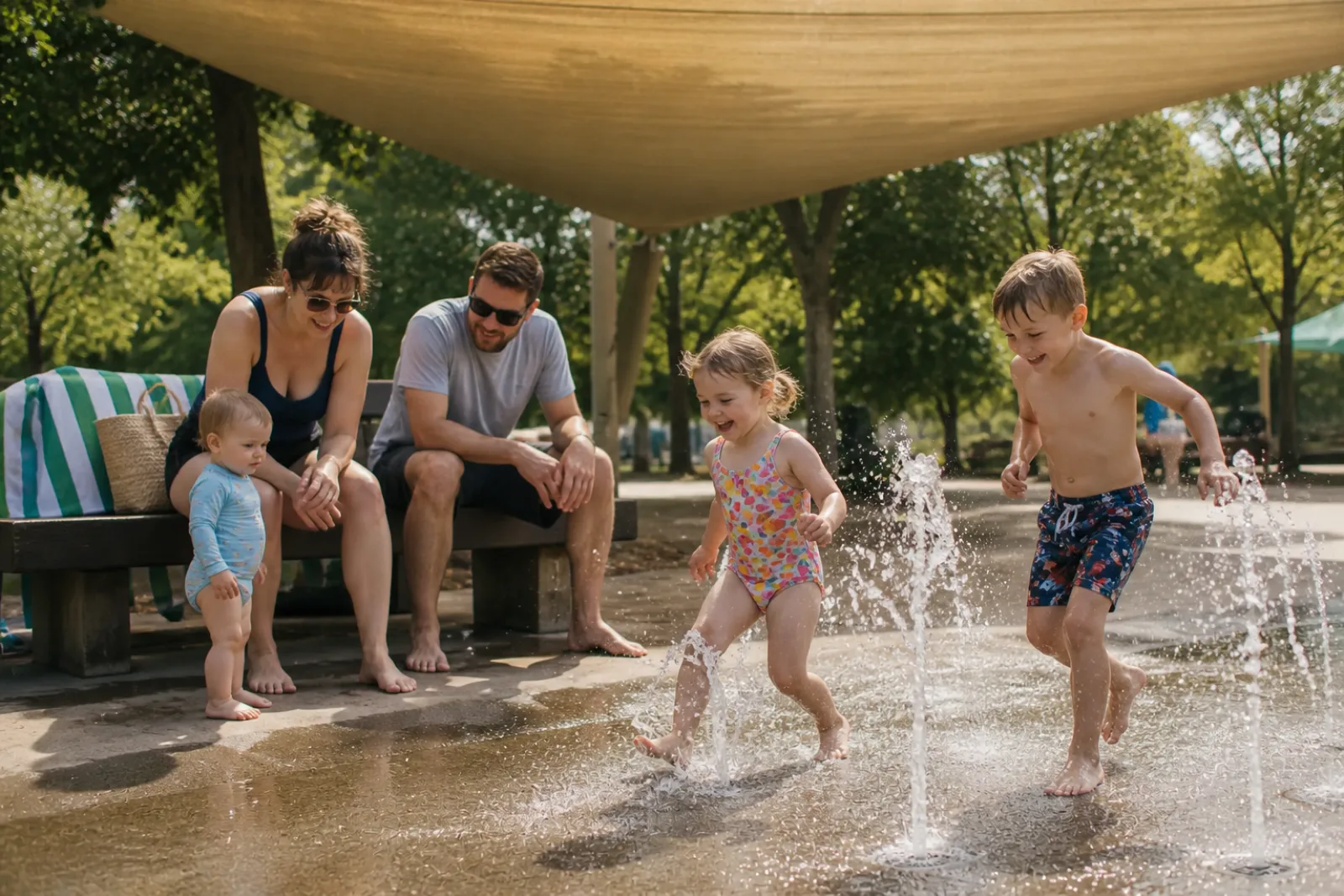
Guide 1
How to tell if the water is on today
Search the splash pad’s exact name and city. Open the city parks, recreation department, or venue website, then find current season dates and water hours rather than only park hours.
Check same-day closure notices or social updates, and call if the information looks old or unclear. Do not treat a decorative fountain as a play area unless the operator says it is designed and maintained for water play.
Quick checks
- Search the exact splash-pad name and city.
- Look for water-operation hours and current season dates.
- Call when the latest official notice is unclear.
Guide 2
Park hours and water hours are different
m. The park may stay open after the water shuts off.
Season dates move with weather, maintenance, water restrictions, staffing, or the school calendar. Check official sources in this order: a dated notice from the city or venue that runs the pad, a current parks-and-recreation page, a same-day closure alert, then a phone message or staff confirmation.
Map listings and parent reviews help with photos and practical details, but they may not reflect this week’s schedule.
Quick checks
- Separate park opening hours from water hours.
- Give dated operator notices the most weight.
- Use reviews for practical details rather than today’s status.
Guide 3
Check the shade at your visit time
A tree may cover the benches in the morning and miss the whole play surface after lunch. Look at recent photos, notice where the sun sits, and go earlier on hot days.
Shade for adults matters too. It is harder to supervise from the only comfortable seat when it is far from the water.
Quick checks
- Look for shade over both seating and part of the play surface.
- Compare recent photos from the hour you plan to visit.
- Avoid a long unshaded walk from the car.
Best options by situation
| Situation | Best option | Why it works | Watch out for |
|---|---|---|---|
| You are bringing a toddler | Gentle ground sprays with a dry edge | The child can watch before moving into the water. | Strong jets, tipping buckets, and fast older children. |
| You have children of mixed ages | Separate spray zones or a playground next door | Younger and older children do not need the same water pressure or pace. | One crowded feature where everyone collides. |
| You only want a short stop | A pad with close parking and nearby changing space | Arrival and departure stay in proportion to the playtime. | A long unshaded walk can make a quick visit much harder. |
| The day is very hot | Shade over seating and part of the play surface | Children and adults have a nearby place to cool down. | A distant picnic shelter does not help with supervision. |
| A child is toilet training | Open restrooms close to the play area | Bathroom trips can happen without crossing the whole park. | Seasonal restroom buildings may be listed but locked. |
| Mobility access matters | A step-free route with firm surfaces and accessible facilities | The family can move between parking, water, seating, and bathrooms. | Curbs, grass-only access, steep paths, and slippery transitions. |
Guide 4
Confirm bathrooms and changing space
Check that the restroom building is open during splash-pad hours. A family restroom, changing table, or simple dry patch can be the difference between an easy 45 minutes and changing a wet child beside the car.
For a child who is toilet training, “restrooms available” is not enough if the seasonal building is locked.
Quick checks
- Confirm the restroom building follows the same hours as the water.
- Look for a dry place to change clothes.
- Pack a changing mat when the facility details are uncertain.
Guide 5
Check the surface and water features
Wet concrete, rubber, and painted surfaces get slippery. Dark surfaces get hot in direct sun.
Watch where children change direction, test a dry edge with your hand, and use water shoes if the venue recommends them. Toddlers often prefer low bubbling jets or gentle arches.
Tipping buckets, surprise sprays, and high-pressure jets can thrill one child and overwhelm another. A dry observation edge lets a cautious child join slowly.
Quick checks
- Test dry edges and watch slippery turning points.
- Match jet strength and surprise features to the youngest child.
- Keep a comfortable dry edge available.
Guide 6
A healthier splash-pad visit
Splash-pad water is not drinking water. The CDC advises families not to swallow it, not to sit or stand on jets, and to take bathroom breaks or check diapers about every hour.
Children with diarrhea should stay out. Stay close even though there is no pool.
Watch slippery surfaces and collisions, and use only fountains clearly meant for play. A decorative fountain may not be treated or monitored as a public splash pad.
Quick checks
- Keep children from swallowing the water or sitting on jets.
- Take regular bathroom or diaper breaks.
- Stay within close supervising distance around wet surfaces.
Guide 7
Choose the easiest time of day
Early morning is often the easiest window on hot days because surfaces are cooler, the sun is weaker, and crowds are smaller. Late afternoon can work when the pad has reliable shade and the water runs long enough.
Check the shut-off time before promising the visit. If the heat is severe, the air quality is poor, or storms are nearby, use the indoor backup.
Running water does not cancel heat, lightning, smoke, or a long exposed walk.
Quick checks
- Check heat, air quality, and storms before leaving.
- Confirm the water will stay on for the whole planned visit.
- Use the indoor backup when conditions are not comfortable.
Guide 8
What to bring
Bring swimsuits or clothes that can get soaked, towels, a full change of clothes, drinking water, a simple snack, sunscreen, hats, and swim diapers when required. Add water shoes only when the rules allow or recommend them, plus a wet bag or spare grocery bag.
For a cautious child, one familiar toy or dry activity is enough. A towel, dry clothes, and water solve more problems than a full beach setup when the car is nearby.
Quick checks
- Pack towels and a complete dry change of clothes.
- Check rules for swim diapers and water shoes.
- Bring drinking water separately from the play area.
Guide 9
Pick a backup before you leave
Choose a shaded playground, library children’s room, community center, short snack stop with a bathroom, or simple water play at home. Keep the backup only a few minutes from the splash pad.
The backup matters most when the water is off. Choose it before a disappointed child is standing in a swimsuit beside a dry fountain.
Quick checks
- Choose one nearby backup before anyone gets changed.
- Confirm the backup’s hours too.
- Do not drive to a second splash pad that has not been checked.
Choose without scrolling forever
- 1
Search the exact splash pad name, city, and today's date.
- 2
Check official water hours and closure notices.
- 3
Confirm shade, bathrooms, parking, and ground surface.
- 4
Check weather and review posted water-play rules.
- 5
Pack dry clothes and keep a nearby backup ready.
Before you leave the house
- Today's water hours confirmed
- Closure notices checked
- Weather and heat checked
- Shade and bathrooms confirmed
- Water shoes, towels, and dry clothes packed
- Dry backup chosen
Frequently asked questions
How do I find a splash pad that is open now?
Search the exact name and city, then check the operator’s current website or social updates. Look for water hours and season dates, and call when that information is unclear.
Are splash pads usually free?
Many public splash pads are free. Some sit inside pools, recreation centers, water parks, or paid attractions. Check admission, parking, residency rules, and booking.
What age is best for a splash pad?
They can work from toddler through school age when the features and crowd match the child. For younger children, look for gentle sprays, a dry edge, clear sightlines, and space away from bigger children.
Do splash pads close when it rains?
Policies vary. Operators may shut the water for lightning, severe weather, poor air quality, maintenance, or water-quality concerns. Check same-day updates.
Does my child need a swim diaper?
Many splash pads require swim diapers for children who are not toilet trained. Check the posted rules and bring extras because regular diapers get heavy in water and may not meet the rules.
Are splash pads safe for toddlers?
Use a public play fountain that is operated and maintained for water play, stay close, follow posted rules, keep children from swallowing the water or sitting on jets, and take regular bathroom or diaper breaks.
What if it is closed when we arrive?
Use the backup you chose before leaving, such as a shaded playground, library, community center, snack stop, or water play at home. Do not drive to another unconfirmed splash pad.