Guide 1
Start with the shade over the play equipment
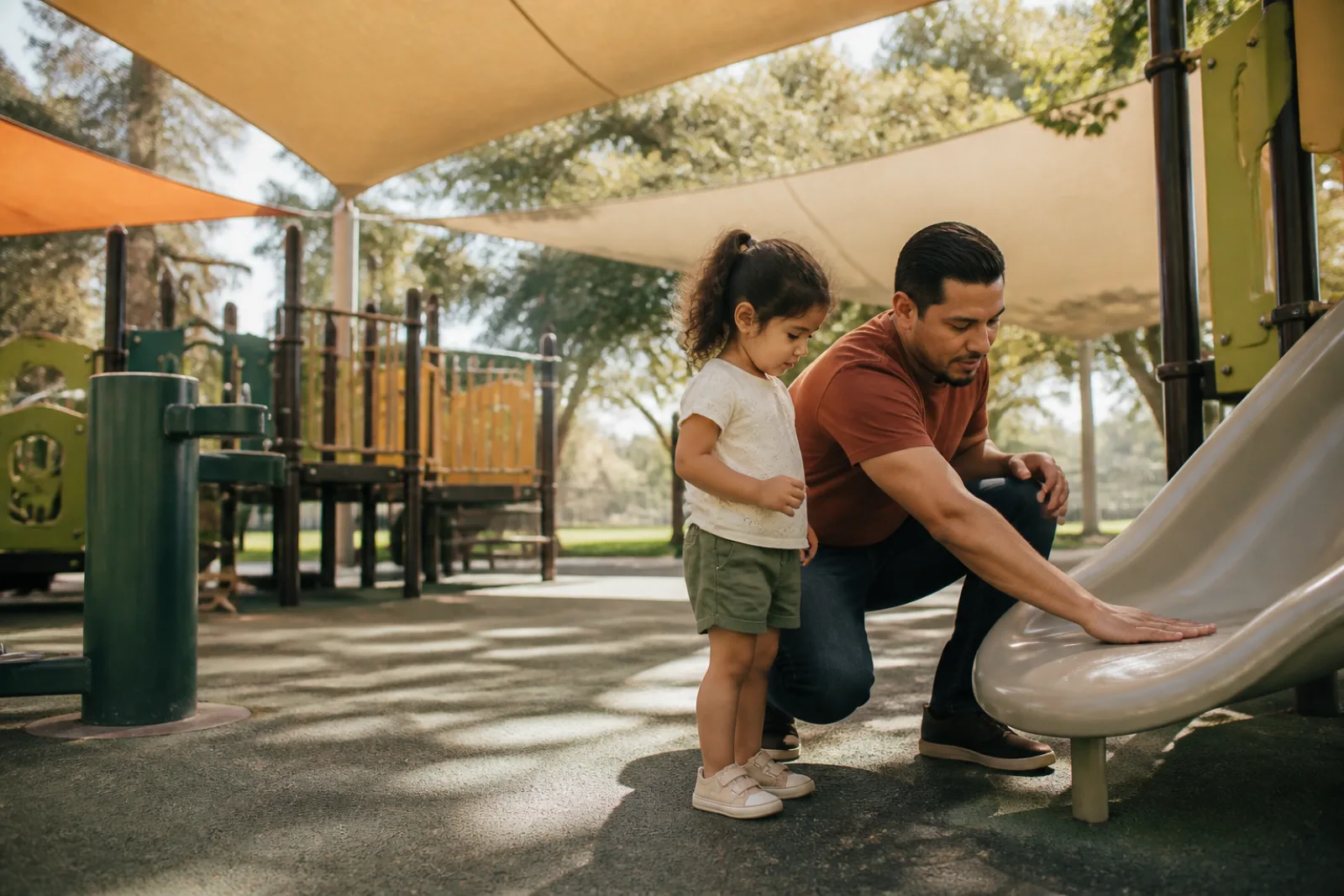
Look closely at where the canopy or tree cover sits. Shade over a bench is useful for snack breaks, but it does not help much if the slides, steps, and climbing platforms are in direct sun.
Recent parent photos are often more useful than a park description because they show the actual play area. If the photos were taken at different times of day, compare the shadows before choosing when to go.
Quick checks
- Look for shade over slides, platforms, swings, and the toddler area.
- Check whether adult seating is shaded and close enough for supervision.
- Use recent photos; young trees may not provide useful cover yet.
Guide 2
Choose the right time, not just the right park
m. and exposed by noon.
Canopies are more predictable, but low sun can still reach under them. On hot days, an early visit is usually easier because the equipment and ground have not stored hours of heat.
If you can only go later, choose a park with broad overhead cover and a short walk from the car.
Quick checks
- Go early when the forecast is hot.
- Check which side of the equipment is exposed as the sun moves.
- Avoid planning the visit during the hottest part of the day.
Guide 3
Check the surface before children start playing
Artificial turf, poured rubber, dark plastic, and metal can become uncomfortable even when the air temperature seems manageable. Touch the slide, handrails, steps, and ground with your palm before a child uses them.
Sand and wood chips often feel different from rubber or turf, but every surface should still be checked. Shoes and water help, but they do not make dangerously hot equipment safe.
Quick checks
- Test slides, rails, steps, and the ground with your hand.
- Keep shoes on when the surface feels warm.
- Leave or use the backup if equipment stays too hot to touch comfortably.
Best options by situation
| Situation | Best option | Why it works | Watch out for |
|---|---|---|---|
| A warm, sunny morning | Canopy-covered equipment with shaded seating | Children and adults can stay comfortable in the same part of the park. | A shaded picnic shelter does not mean the playground is shaded. |
| You can go before lunch | A tree-shaded park with strong morning cover | Cooler air and surfaces make partial shade more useful. | The same park may feel completely different later in the day. |
| The air feels warm but not extreme | Full shade with a light-colored or loose-fill surface | The play area is less likely to hold as much direct solar heat. | Partial shade does not guarantee cool equipment. |
| You have a toddler and an older child | Adjacent age zones visible from shaded seating | Both children can play without splitting the adults across the park. | Separate play areas can make supervision difficult. |
| You want a low-effort visit | Shade, nearby parking, and a reliable bathroom | The practical details support a calmer arrival and exit. | A beautiful park may still be hard with a long exposed walk. |
| Heat or air quality feels questionable | Indoor backup with easy parking and bathrooms | A weather-safe option removes the main risk instead of reducing it slightly. | Do not rely on shade alone during dangerous conditions. |
Guide 4
Match the playground to your child's age
For toddlers, look for a shaded smaller structure, low slides, bucket swings, a fence or clear boundary, and a short path from the car. Older children may want taller climbing equipment, open grass, courts, or a trail nearby, but those areas may not share the playground's shade.
For siblings, check that both play zones are visible from one shaded spot so you are not choosing between comfort and supervision.
Quick checks
- Toddlers: low equipment, shade, boundaries, and a quick exit.
- Older kids: enough challenge without sending them into an exposed area.
- Mixed ages: one shaded supervision point with clear sightlines.
Guide 5
Do a quick bathroom, water, and parking check
Shade is only one part of an easy park visit. Confirm whether bathrooms are open, whether drinking water is available, and how far the playground is from parking.
A long unshaded walk can undo the benefit of a covered play area. If the park has no bathroom, decide before leaving whether your child can handle the visit and where the closest reliable stop is.
Quick checks
- Confirm bathroom availability instead of assuming the building is open.
- Bring enough drinking water for the drive and the visit.
- Check the walk from parking to the play area.
Guide 6
Know when the weather calls for a different plan
Shade does not remove high heat, humidity, poor air quality, storms, or smoke. Shorten the visit if children become unusually tired, flushed, irritable, dizzy, or stop sweating normally.
On difficult weather days, switch to a library, children's museum, indoor playground, or another air-conditioned place instead of trying to make the park work. The goal is a good outing, not proving that you can stay outside.
Quick checks
- Check the current forecast and air quality before leaving.
- Keep the first visit short when conditions are borderline.
- Use an indoor backup when shade is not enough.
Guide 7
Pack for a short, comfortable park visit
Bring water, hats, sunscreen, simple snacks, wipes, and a light change of clothes if the park has sand or water play. A small towel is useful for hot or wet equipment.
For babies and toddlers, add a stroller fan only if it can be attached safely and kept out of reach. Keep the first visit shorter than you think you need; you can always stay a little longer if everyone is comfortable.
Quick checks
- Water, hats, sunscreen, snacks, and wipes cover most visits.
- Bring a towel or spare clothes for sand and water play.
- Plan an easy exit before children are overheated or overtired.
Guide 8
Compare the real options before you leave
Once you find one or two possible parks, compare the details that will change the day: shade at your planned time, surface type, bathrooms, parking, age fit, and the distance to an indoor backup. A smaller covered playground ten minutes away may work better than a large destination park with uncertain shade.
Check the option that fits today's weather and your family's energy, then confirm the latest park information before you go.
Quick checks
- Compare one to three real playgrounds, not a long list.
- Choose the park with the fewest difficult unknowns today.
- Confirm closures, maintenance, and current hours with an official source.
Choose without scrolling forever
- 1
Choose the kind of day you actually have.
- 2
Use the table to pick the best option.
- 3
Check the quick checks before leaving.
- 4
Confirm practical details once the activity type is clear.
- 5
Save one backup in case weather or energy changes.
Before you leave the house
- Enough time for the drive and visit
- Restrooms, parking, and shade checked
- Indoor or low-effort backup saved
- Hours, calendar, or registration confirmed
- Kids' age and energy fit the outing
- Budget still fits after tickets, parking, or supplies
Frequently asked questions
How can I tell whether a playground is actually shaded?
Look for recent photos showing the equipment, not only the picnic area. Compare shadows in photos taken at different times, check satellite imagery, and read recent parent comments. A canopy over the main structure is usually more predictable than young trees.
What is the best time to visit a shaded playground?
Early morning is usually the easiest choice on hot days because the equipment and ground have had less time to heat up. The best time still depends on the direction of the shade, so check the park's recent photos and local forecast.
Can playground equipment get hot under a canopy?
Yes. Low-angle sun, reflected heat, and warm air can still heat slides, rails, rubber, and artificial turf. Test surfaces with your hand before children play.
What should I bring to a playground on a hot day?
Bring drinking water, hats, sunscreen, snacks, wipes, and a towel or change of clothes if there is sand or water play. Keep the visit short and have an indoor backup ready.
Is a shaded playground safe during extreme heat?
Not always. Shade reduces direct sun but does not remove dangerous heat or humidity. Follow local heat guidance, watch children closely, and choose an air-conditioned indoor outing when conditions are unsafe.
What is a good backup if the playground is too hot?
A library children's area, indoor playground, children's museum, community center, or short bookstore visit can work. Pick one close to the park so changing plans does not require another long drive.